

.png)

How Muscle Activation Improves Stability

A knee that feels unreliable on stairs, a shoulder that pinches when reaching overhead, or a low back that tightens after standing may not begin at the painful area. Often, the body is working around a muscle that is not contributing when it should. Understanding how muscle activation improves stability helps explain why lasting musculoskeletal recovery requires more than stretching a tight spot or strengthening whatever feels weak.
Your body creates stability through timing, coordination, and communication. Muscles must receive and respond to the right neurological signals at the right moment. When that system is disrupted, another muscle, joint, or movement pattern takes over. You may still get through your workout, workday, or weekend activities, but the cost can be recurring pain, stiffness, reduced confidence, and a growing list of compensations.
How Muscle Activation Improves Stability in Real Life
Muscle activation is the process of assessing whether a muscle can properly engage and helping restore its ability to participate in movement. This is different from simply building muscle size. A muscle can be strong in a gym exercise yet fail to activate effectively when you step off a curb, carry a child, rotate to put something in the car, or stabilize your body during a golf swing.
Think of stability as an active process rather than a rigid position. Your nervous system is constantly collecting information from your eyes, inner ear, joints, feet, and muscles. It then adjusts muscular tension to keep you balanced and controlled. When a key muscle is inhibited, delayed, or poorly coordinated, the body finds another way to complete the task.
For example, if the gluteal muscles do not engage well during walking, the low back, hip flexors, hamstrings, or muscles along the outside of the hip may take on more work. That can alter the way the pelvis and knee move. The immediate goal is still accomplished: you walk. But over time, the compensation may contribute to hip discomfort, knee tracking problems, low-back tension, or fatigue.
Restoring activation can improve the quality of that movement. The goal is not to force a muscle to work in isolation forever. It is to help the body recruit the right support at the right time so joints can move with greater control and less unnecessary strain.
Stability Is Not the Same as Being Tight
Many people mistake tension for stability. They describe themselves as “tight but weak,” or they brace their abdomen, clench their shoulders, and lock their knees in an effort to feel secure. That strategy can offer a short-term sense of control, but it is not the same as efficient stability.
True stability allows enough control to move freely. Your ankle needs to adapt to uneven ground. Your hips need to guide your legs during a squat. Your shoulder blade needs to remain supported while still gliding as you reach. If the body relies on chronic gripping, the result may be limited mobility, shallow breathing, headaches, muscle soreness, and joints that feel worse rather than better after activity.
Muscle activation work looks at whether the stabilizing muscles are available before the larger “mover” muscles take over. Around the shoulder, that may include the rotator cuff and muscles that guide the shoulder blade. Around the pelvis, it can involve the glutes, deep abdominal system, hip rotators, and muscles of the feet and lower leg. The exact pattern is individual, which is why generic strengthening programs do not solve every stability problem.
The Body’s Compensation Patterns Matter
Compensation is not failure. It is your body’s intelligent attempt to protect you and keep you moving. However, a compensation pattern becomes a problem when it persists long after the original stressor has passed.
A prior ankle sprain, for instance, can change how you load one foot even when swelling and bruising are gone. A period of prolonged sitting can leave certain hip muscles underused while others become overworked. A painful shoulder may teach you to avoid using specific muscles, even after the original irritation improves. Stress, poor sleep, inflammatory foods, dehydration, nutrient deficiencies, and inadequate recovery can also affect how well the nervous system and muscles perform.
That is why a root-cause approach matters. Stability is structural, but it is not only structural. The quality of your movement can be influenced by inflammation, energy production, nutrient status, nervous system stress, old injuries, and the demands of your daily life.
What a Personalized Muscle Activation Assessment Can Reveal
A thoughtful assessment does not start by assuming the painful area is the problem. It evaluates movement, posture, joint mechanics, and muscular response to identify where support may be breaking down.
At Holistic Living Innovations Chiropractic, muscle activation can be integrated with Applied Kinesiology and a broader whole-body evaluation. This allows care to consider whether an apparent weakness is related to a local injury, an imbalance in movement mechanics, neurological stress, nutritional needs, or a deeper compensation pattern. The purpose is not to chase a single symptom. It is to understand why the body had to compensate in the first place.
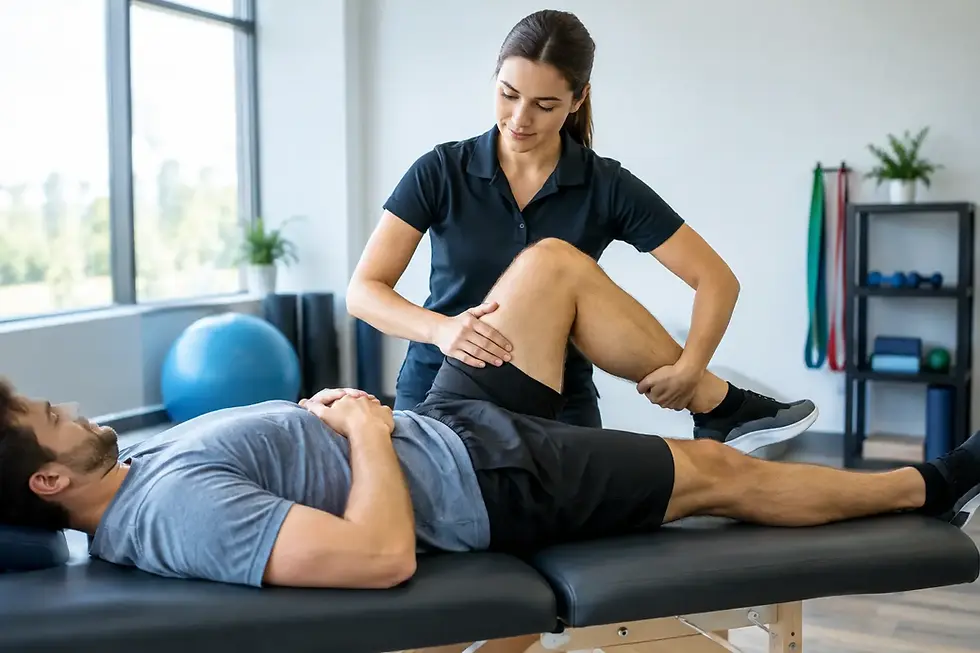
During this kind of evaluation, a practitioner may assess how specific muscles respond under gentle resistance, compare left and right sides, observe how muscles coordinate through movement, and check whether restoring input changes pain or function. The findings help guide a care plan that may include chiropractic adjustments, targeted activation work, corrective movement, shockwave therapy when appropriate, nutrition support, or further functional testing.
No two people need the same plan. The active parent with recurring low-back flare-ups, the runner with a stubborn hip issue, and the office professional whose neck and shoulders constantly tighten may all have different drivers behind a similar complaint.
Why Strengthening Alone May Not Be Enough
Strength training is valuable, especially when it is progressed thoughtfully. But loading a muscle that is not coordinating well can reinforce a compensation if the underlying pattern is ignored. More repetitions do not automatically create better recruitment.
Consider someone with knee pain during squats. The answer may be to strengthen the legs, but it may also require examining foot control, ankle mobility, hip activation, pelvic position, core coordination, and the way the person shifts weight. If those pieces are not addressed, the knee may continue absorbing force it was not designed to manage alone.
The reverse can also be true: activation exercises without progressive strength and real-world movement practice may not be enough for long-term results. Once a muscle can engage more effectively, the body needs appropriate opportunities to use that new pattern. Recovery commonly includes a blend of hands-on care, targeted exercises, movement coaching, adequate protein and nutrient intake, sleep, and sensible activity progression.
This is where individualized guidance protects you from the “more is better” trap. If a movement creates sharp pain, instability, numbness, or worsening symptoms, pushing through is not a sign of discipline. It is a signal to reassess.
Everyday Habits That Support Better Muscle Function
The work done in the office matters, but your nervous system also learns from what you repeat between visits. Small daily choices can either support or compete with a new movement pattern.
Start by changing positions regularly instead of remaining seated or standing in one posture for hours. Walk with intention, allowing your arms to swing and your feet to contact the ground naturally. Before demanding activity, use a short warm-up that prepares the hips, shoulders, and trunk for the specific movement ahead rather than relying on aggressive stretching alone.
Recovery is equally practical. Muscles need fuel, hydration, circulation, and sleep to perform well. If you are fatigued, undernourished, highly stressed, or dealing with digestive dysfunction, your body may have a harder time adapting to physical care and exercise. For some people, targeted nutrition and deeper functional assessment are essential parts of improving resilience, not an unrelated side project.
Pay attention to patterns. Does your pain appear after poor sleep? Does one side of your body always feel more restricted? Does an old injury flare when training volume increases? Those observations give valuable clues about what your body needs.
A More Confident Way to Move
Lasting stability is not about moving cautiously through life. It is about giving your body the support to move with confidence again. When muscles activate in better sequence, joints are not forced to do work that belongs elsewhere. Movement can feel smoother, stronger, and less guarded.
Healing is possible, even when the same issue has returned for years. The next step is not guessing which muscle to stretch or searching for another generic exercise. It is identifying the pattern your body has been trying to manage and giving it the personalized support to change. A New Way of Life Begins Here: with the decision to listen to your body and address what is underneath the instability.


Comments